

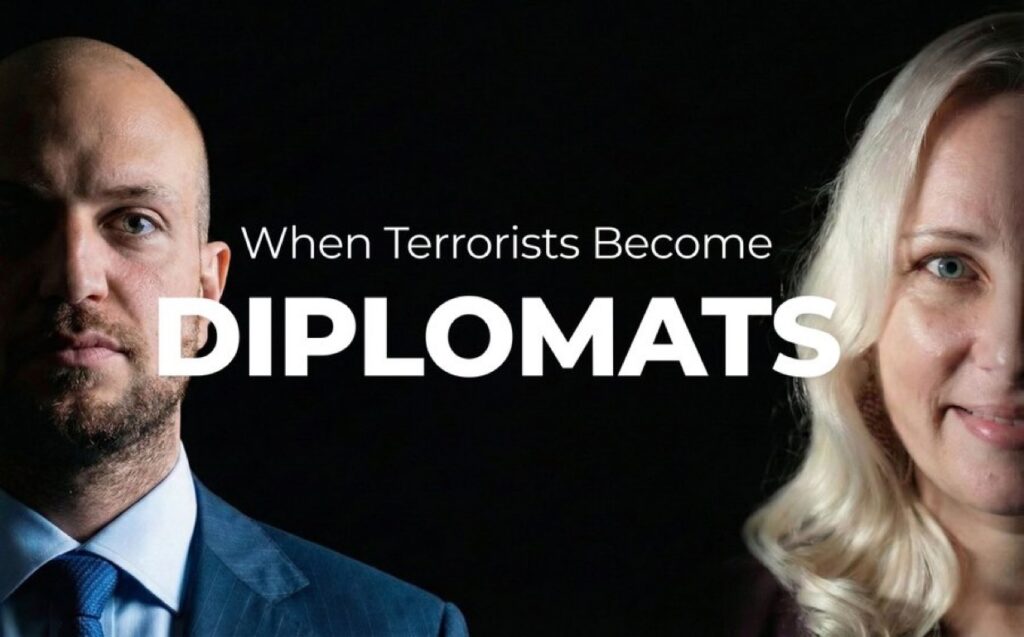
Sarah Adams, a former CIA targeting officer with extensive experience in counterterrorism operations across the Middle East and North Africa, including Libya, has been vocal about alleged ties between Libyan Prime Minister Abdul Hamid Dbeibah’s Government of National Unity (GNU) and al-Qaeda networks. She authored Benghazi: Know Thy Enemy, detailing her investigations into the 2012 Benghazi attacks, and frequently discusses terrorism threats on platforms like X.

Adams claims that individuals linked to al-Qaeda, including some involved in the Benghazi incident, hold influential positions within Dbeibah’s administration in Tripoli. For instance, she has described the Tripoli government as a “puppet” backed by al-Qaeda and accused it of enabling terrorist activities, such as being aware of al-Qaeda plots against rival forces in eastern Libya led by General Khalifa Haftar’s Libyan National Army (LNA).
She further alleges that al-Qaeda operatives have been “promoted” to key roles in Dbeibah’s government rather than being marginalized after past attacks. Adams has also tied this to broader U.S. policy failures, comparing it to similar dynamics in Afghanistan and Syria where governments were allegedly propped up with terrorist elements.
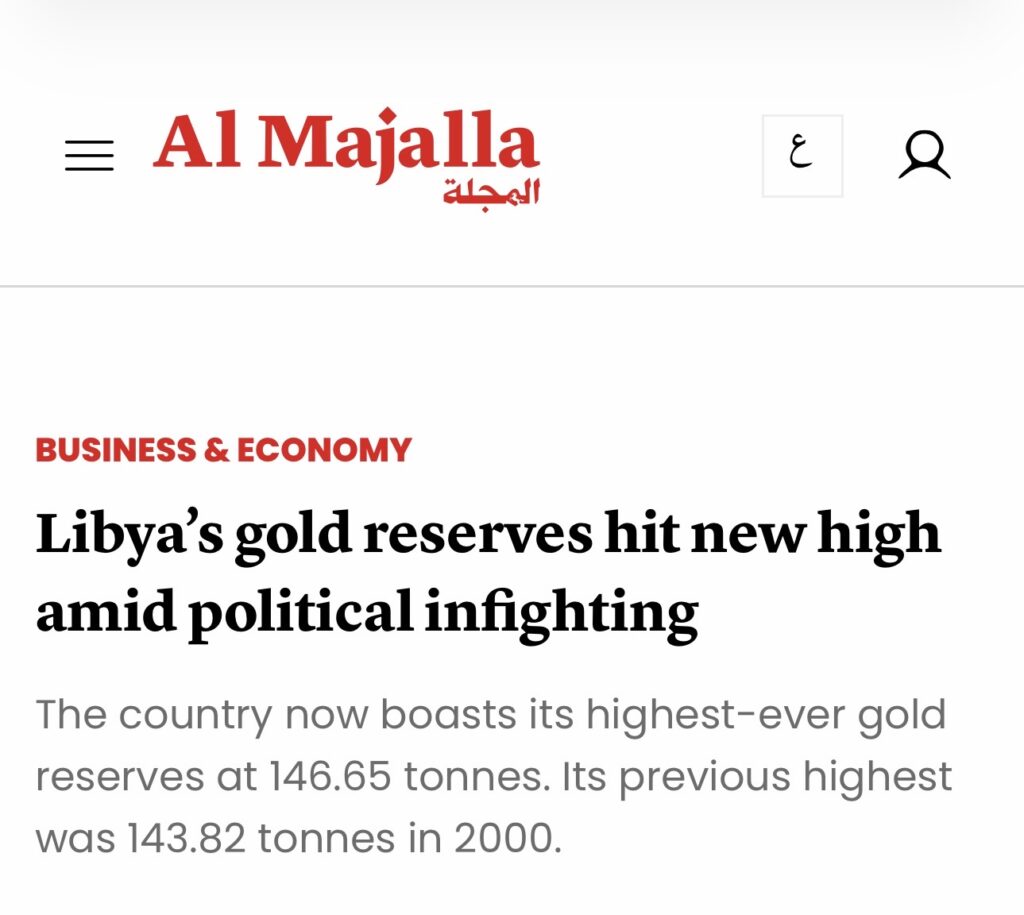
Regarding the specific accusation of Dbeibah and his family stealing billions in gold from Libya, Adams has not directly addressed this in her recent public statements, but broader allegations of corruption against Dbeibah align with such claims. Dbeibah, a businessman and former associate of Muammar Gaddafi, has faced repeated accusations of corruption, money laundering, and vote-buying since his appointment as interim prime minister in 2021 via a UN-backed process. Libya’s gold reserves, which hit a record high in 2024 amid political divisions, have been plagued by smuggling, theft, and fears of fraud, with some reports suggesting historical lootings (like the 2011 disappearance of around 20% of reserves) could be repeated under current leadership.
Critics, including in social media and analysis pieces, have explicitly labeled Dbeibah’s family as generational corrupt actors who may have siphoned billions, tying this to broader illicit gold trade linked to corruption and money laundering. These issues are exacerbated by Libya’s fragmented state, where militias and rival governments control resources, and endemic corruption deters foreign investment.
On Dbeibah’s alleged direct contact with al-Qaeda and promises to release terrorists, Adams references discussions in Afghanistan meetings where such commitments were reportedly made, positioning Dbeibah as complicit in supporting terrorist elements.
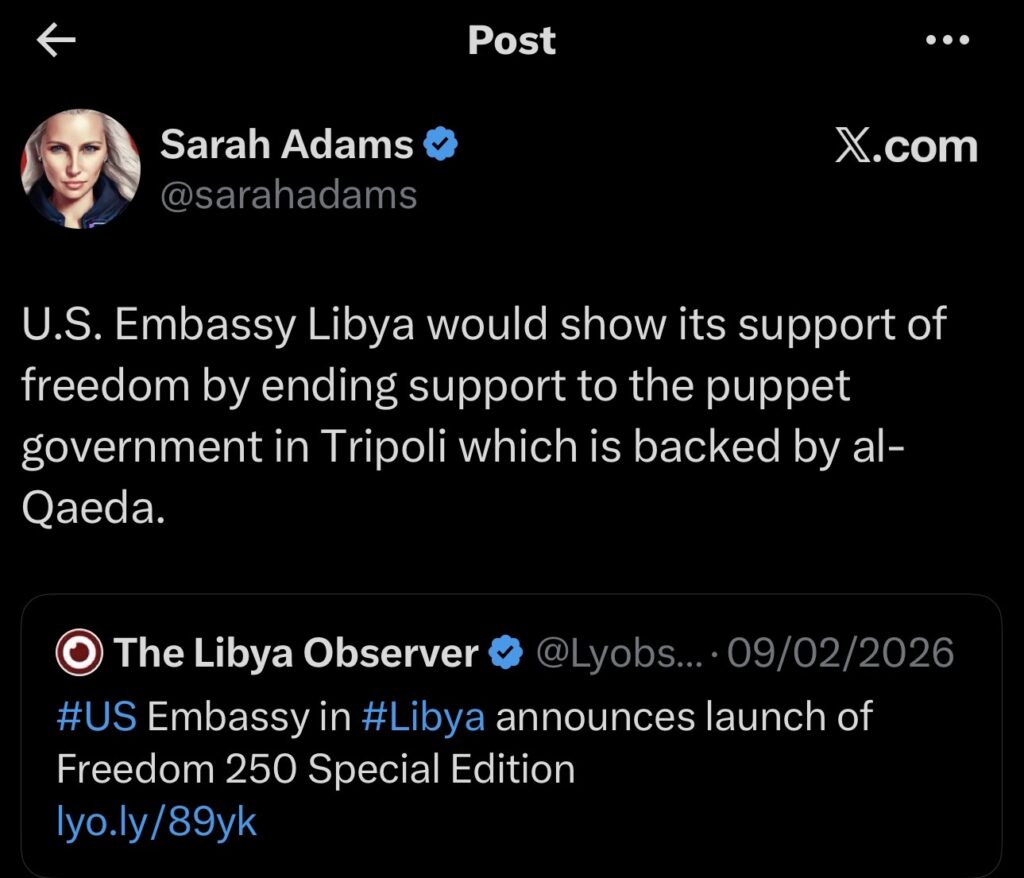
This fits into her broader narrative that the GNU in Tripoli is intertwined with al-Qaeda affiliates, including figures like Libya’s Grand Mufti Sadiq al-Gharyani, whom she calls an al-Qaeda operative.
Historical context supports concerns about al-Qaeda’s presence in Libya: Post-Gaddafi chaos allowed groups like Ansar al-Sharia (linked to al-Qaeda) to flourish, with operatives like Abu Anas al-Libi building networks there. Dbeibah has also been accused of financing the Muslim Brotherhood, which some analysts view as overlapping with broader Islamist networks, though not directly al-Qaeda.
However, Dbeibah’s government denies normalization with entities like Israel and has engaged with the U.S. on counterterrorism, including training and professionalizing forces against threats like ISIS and al-Qaeda in the Islamic Maghreb.

Adams advocates for increased U.S. involvement in Libyan counterterrorism, particularly supporting operations against al-Qaeda strongholds, echoing calls to avoid repeating past policy errors that empowered extremists. Libya remains divided, with Dbeibah’s GNU in the west facing Haftar’s LNA in the east, amid ongoing UN efforts for unification and elections.
These allegations highlight persistent instability, but they stem largely from Adams’ perspective and unverified reports; independent investigations, such as those by the UN or U.S. agencies, have not publicly substantiated direct al-Qaeda control over Dbeibah’s government or personal gold theft, though corruption probes continue. For a full picture, stakeholders like Haftar’s camp and international observers often present conflicting narratives, with Adams’ views representing a hawkish counterterrorism stance.