

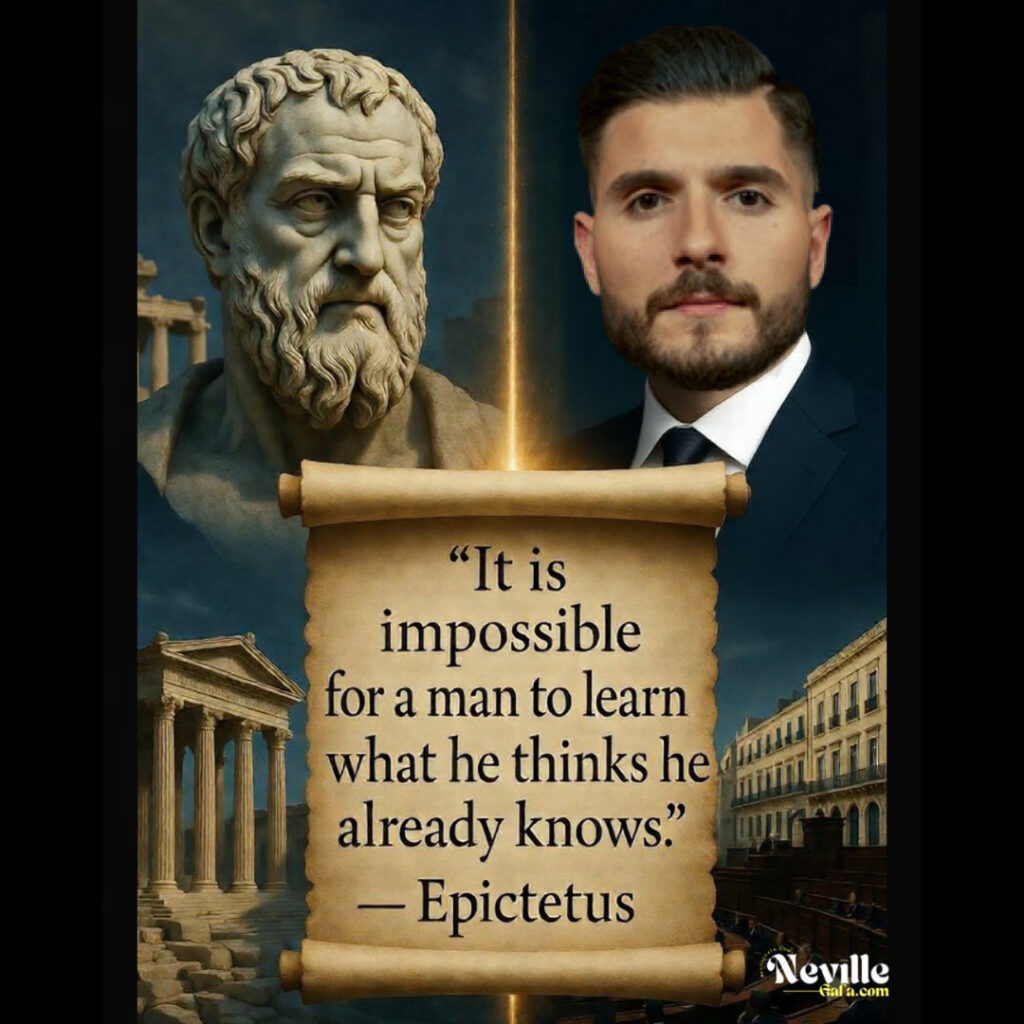
“It is impossible for a man to learn what he thinks he already knows.”
— Epictetus, Discourses
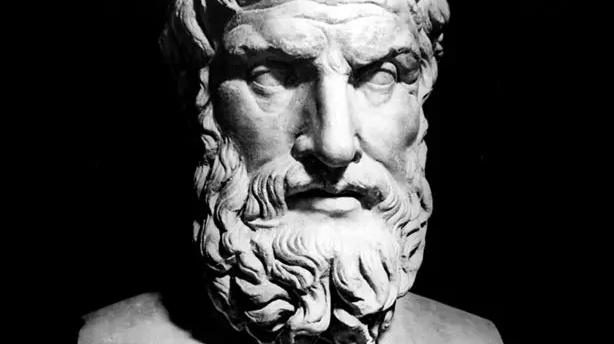
Epictetus
In the Stoic tradition, Epictetus delivers not a mere aphorism but a profound diagnosis of the human condition. The slave-turned-philosopher understood that the greatest obstacle to wisdom is not ignorance itself, but the conviction of knowledge. When the mind is convinced it possesses the truth, the doors of perception slam shut. No new evidence can enter. No contrary voice can be heard. Learning becomes impossible because the learner has already declared the lesson complete.
This ancient insight finds disturbing resonance in contemporary politics, nowhere more clearly than in the early tenure of Alex Borg, leader of Malta’s Nationalist Party (PN) since September 2025. At thirty years old, the youngest major-party leader in the nation’s history and its first Gozitan-born chief, Borg ascended on a wave of hope for renewal. Yet his actions since taking the helm have illustrated Epictetus’s warning with almost clinical precision: the man who thinks he already knows cannot learn — and a party, a country, suffers for it.
The Illusion of Mastery
Epictetus does not condemn knowledge; he condemns presumption.Socrates built an entire method on the admission of ignorance. To claim “I know” before the evidence has spoken is to commit intellectual suicide.
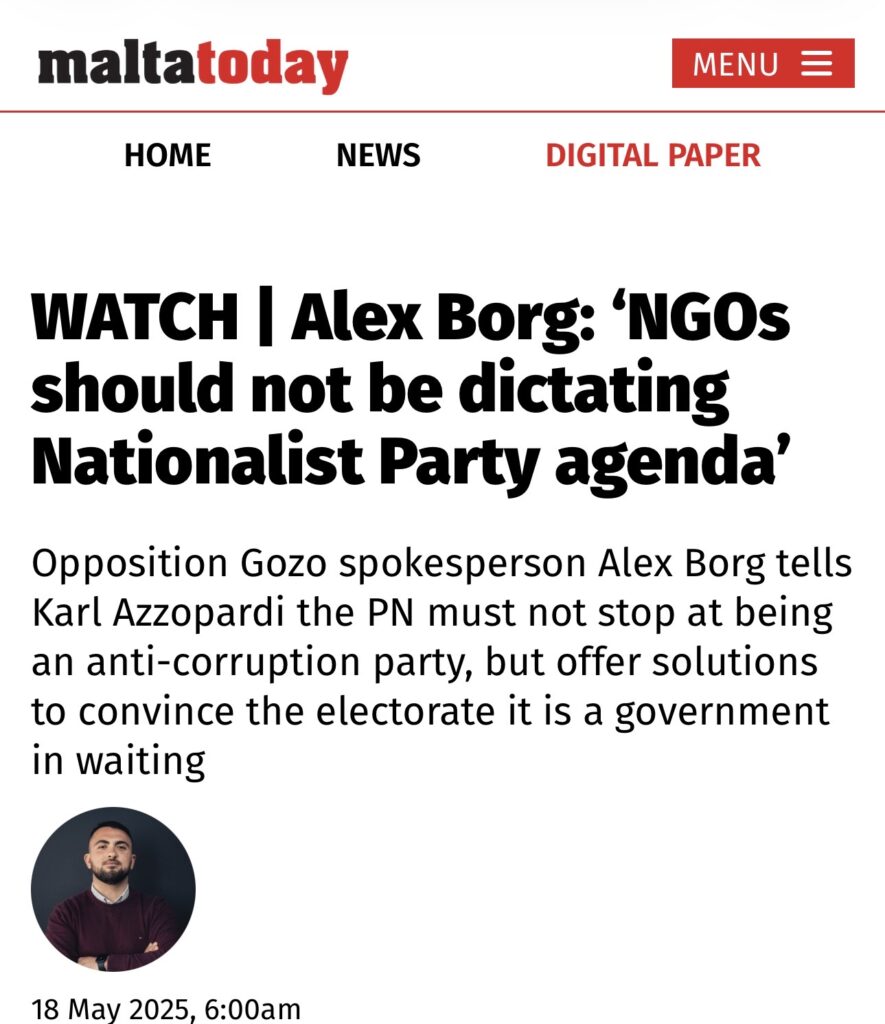
Borg’s leadership has repeatedly displayed this presumption. In May 2025, while still an opposition spokesperson, he declared that NGOs, particularly Repubblika “should not be dictating the Nationalist Party agenda.” The statement was not merely a policy preference; it was an epistemological claim. It asserted that the party (and, by extension, its emerging leader) already possessed the complete map of Malta’s future. External voices offering scrutiny on corruption, environmental degradation, or democratic standards were not partners in truth-seeking but interlopers to be sidelined. The door to learning was politely but firmly closed.
This pattern intensified after his razor-thin victory (50.1 %, a margin of just 44 votes). Within weeks, internal critics noted chaos in the ranks: public outbursts by senior figures during parliamentary sessions, visible discomfort on the front bench, and a failure to impose discipline or direction. One commentator observed that Borg appeared “nervous and helpless” as former leader Adrian Delia and others created scenes the party could ill afford. Rather than treat these fractures as diagnostic data requiring humility and adaptation, Borg’s public posture remained one of unyielding confidence. The message was implicit: the new captain already knows the course; any turbulence must be the fault of the crew.
The Fort Chambray Episode: Refusal to Learn
The clearest embodiment of Epictetus’s paradox came in the Fort Chambray controversy. Borg had strongly backed a controversial development concession on Gozo. When challenged on social media over misleading claims about costs and restoration obligations, the Standards Commissioner investigated and ruled that Borg had breached ethical standards by making inaccurate public statements. The Commissioner ordered a written apology. Borg refused. The matter was referred to the parliamentary standards committee, which ultimately took no further action, but the refusal itself was telling.
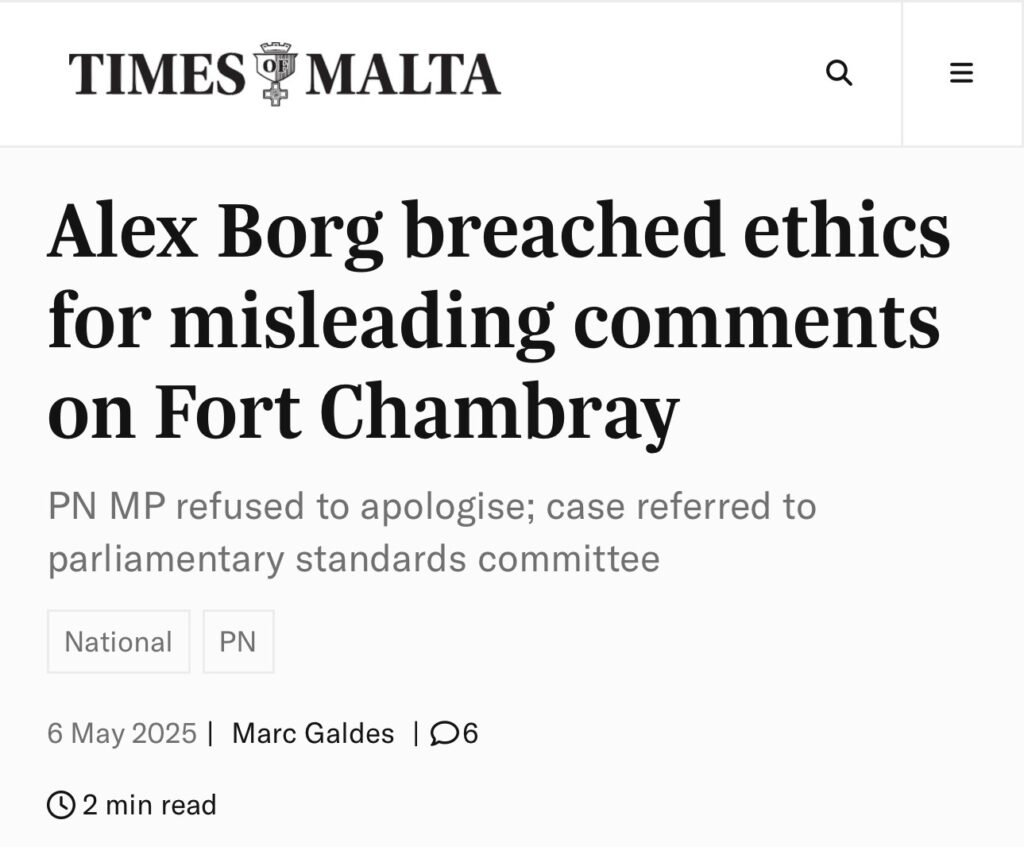
Here was an official finding of error, an institutional invitation to correct course, to acknowledge fallibility, and therefore to learn. Borg’s response was not engagement but defiance. In Epictetan terms, he behaved as one who already knew the truth of the matter; the Commissioner’s verdict was therefore irrelevant. The possibility of growth through self-correction was rejected outright.
Theatrics Over Dialogue
Similar defensiveness appeared in Borg’s reaction to media criticism. In April 2025 he took public offense at being labelled a “Trojan horse” for Labour, responding not with reasoned rebuttal but with personal lashing out and social-media theatrics. An editorial in MaltaToday urged him to “take such criticism on the chin” rather than descend into “infantile theatrics.” The pattern repeats: criticism is not data for refinement but an affront to be countered. The mind that believes it already knows has no use for mirrors.
Even parliamentary collegiality revealed the same flaw. Borg publicly criticised his own colleagues’ behaviour toward the Speaker while defending the Speaker against the party line, an act that, whatever its merits, signalled a conviction that his own judgement superseded collective strategy or party unity efforts. Unity, in this worldview, means alignment with the leader’s pre-formed assessment rather than a shared process of discovery.
Why This Matters for Malta
Epictetus’s warning is not merely personal; it is political. A democracy requires leaders capable of learning from civil society, from opponents, from their own mistakes, from changing realities. When a leader embodies the presumption of knowledge, the entire system stagnates. Policies become dogma. Dissent is reclassified as disloyalty. The young, energetic face that promised renewal becomes, paradoxically, the face of continuity in arrogance.
Borg’s youth was meant to be an asset, a break from the tired certainties of older generations. Yet youth without humility merely accelerates the cycle: the same epistemic arrogance, now dressed in modern rhetoric and delivered via social media. The Nationalist Party, still reeling from years in opposition, needs a leader who can admit “I do not yet know” and therefore learn how to win again. Instead, it has one whose every action whispers the opposite.
The Stoic remedy is brutally simple: cultivate ataraxia through relentless self-examination. Question your assumptions daily. Welcome the critic as a benefactor. Only then does learning become possible.
Malta’s political class and its newest Opposition leader most of all, would do well to meditate on Epictetus’s line. Until Alex Borg internalises that it is impossible to learn what he thinks he already knows, the Nationalist Party will remain trapped in the very illusion that has kept it from power. They will wait, yet again, for a leader humble enough to begin the difficult work of genuine understanding.