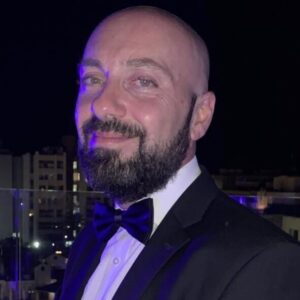

During the compilation of evidence in the Electrogas case, Prof. Stefano Filletti raised serious concerns in response to the manner in which an expert witness was summoned, warning that the procedure adopted risked breaching established European and international legal safeguards.
The issue arose after an expert witness was summoned at the compilation stage without the issuance of a formal decree notifying the defendants or their legal representatives.
Defence lawyers objected, arguing that the absence of notification deprived them of fundamental procedural rights.
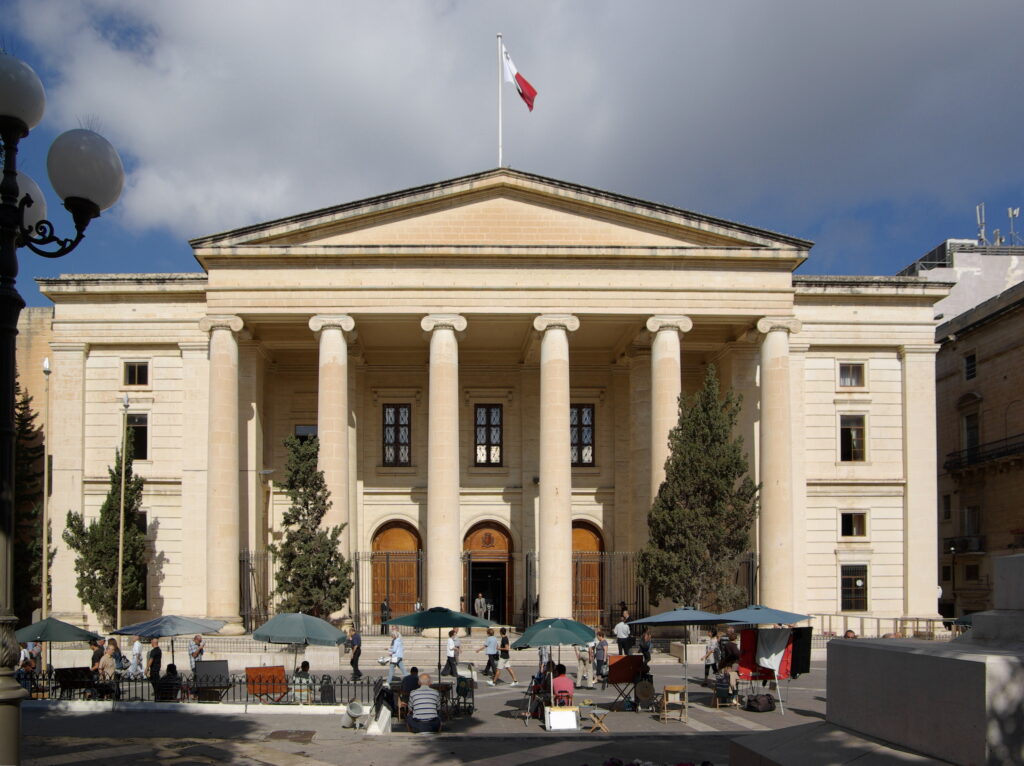
In an extensive plea, Prof. Filletti placed the matter within the broader framework of European Union law and international fair-trial standards, stressing that compilation procedures remain subject to strict safeguards. He argued that the appointment of an expert witness is a decisive procedural act, capable of influencing the course of subsequent criminal proceedings, and therefore requires transparency and full adversarial participation.
Prof. Filletti referred to European judicial cooperation mechanisms developed through the jurisprudence of the Court of Justice of the European Union (CJEU), as well as EU instruments regulating the gathering of evidence, including the European Investigation Order. These frameworks, he explained, are built on principles of judicial oversight, equality of arms, and effective defence participation whenever evidentiary measures are undertaken. Alternative legal tools were available at Council of Europe level, the latest legal instrument, ironically, being the Valletta Protocol to the Mutual Legal Assistance Convention, signed in Malta only last September.
He also invoked safeguards arising from both the Charter of Fundamental Rights in the EU as well as the European Convention on Human Rights within the Council of Europe, noting that the case-law of the European Court of Human Rights consistently extends fair-trial guarantees under Article 6 to evidentiary and preliminary stages. According to Prof. Filletti, the defence must be afforded a real opportunity to be heard whenever expert evidence is introduced.
Prof. Filletti cautioned that failure to observe these safeguards risks undermining the integrity of the compilation process and could expose the proceedings to challenge at both national and European levels.
Separately, Dr Gianella Demarco addressed the court on the strict procedural requirements governing compilation procedures under domestic law. She argued that the summoning of an expert witness without prior notification through a formal decree constituted a clear procedural irregularity.
Dr Demarco emphasised that correct procedure is essential to safeguarding the rights of the accused. She further pointed out that documents presented to the court in relation to the summoning of the expert were illegible, making it impossible for the defence to properly assess or challenge the request. This, she submitted, further compounded the breach of procedural fairness.
At the conclusion of the sitting, Dr Edward Gatt, Dr Mark Vassallo and Dr Stephen Tonna Lowell also made extensive submissions, underlining the necessity of adhering strictly to correct procedures. They warned that departures from established safeguards during the compilation stage risk giving rise to a miscarriage of justice, particularly in complex and high-profile cases such as Electrogas.