

Gozo has always occupied a distinctive place in Malta’s story. Smaller, greener, quieter, yet carrying responsibilities and pressures that often feel disproportionately large. From infrastructure and transport to economic opportunity and environmental care, decisions affecting Gozo are frequently shaped elsewhere, sometimes well, sometimes less so. The question many quietly ask is not whether Gozo needs more attention, but whether it needs a different way of being governed.
Allow me to propose a framework for regional governance that invites us to rethink how decisions about Gozo are made, planned and coordinated – without calling for separation or political upheaval. Its central idea, the core principle, is deceptively simple. Indeed, it looks easy to understand but in actual fact is more profound: better governance is not about adding power, but about improving how institutions work together over time.
This proposal does not suggest another layer of bureaucracy. On the contrary, its stated aim is to reduce fragmentation. Today, responsibility for Gozo’s development is spread across multiple entities, funding streams and decision making timelines. This often results in short term projects that struggle to align with a longer vision, or in infrastructure that arrives late, piecemeal, or without sufficient coordination. This framework argues that the problem is not a lack of effort, but a lack of structure.
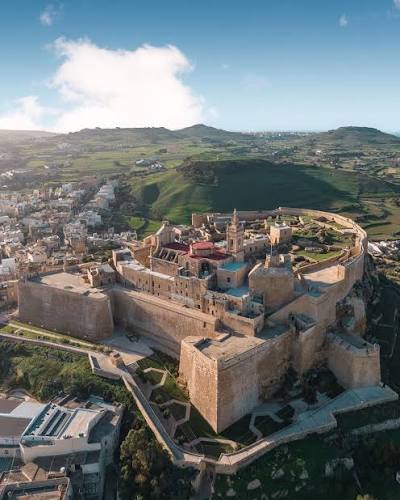
At the heart of the proposal is a phased approach to reform. Rather than dramatic overnight change, it outlines a gradual transition that protects stability while creating momentum. The first phase focuses on something rarely discussed outside policy circles: commitment. Not political rhetoric, but legal and constitutional clarity. Establishing a clearly defined regional governing council for Gozo would signal that planning for the island’s future is not speculative or temporary but embedded in the state’s long term architecture.
Crucially, this early phase prioritises consultation. The Ministry for Gozo, Local Councils, businesses, civil society organisations, and regional institutions are expected to help shape how the system operates, rather than merely respond to it. This marks an important shift in thinking: governance that is designed with communities, rather than for them, tends to be more durable and effective. In other words, the general will of the people should be given the highest priority.
The second phase moves from intention to operation. Once established, the regional council would act as a coordinating body, bringing together national priorities and local realities within a single strategic structure. Instead of multiple agencies pursuing parallel agendas, infrastructure, investment and development planning would be aligned through one regional framework.
One of the most significant ideas introduced here is the concept of predictable, long term capital allocation. For Gozo, this could change how projects are conceived. Planning would no longer depend solely on annual allocations or ad hoc funding decisions, but on multi year certainty. Roads, public spaces, environmental projects and economic initiatives could be designed with durability in mind, rather than speed.
The final phase imagines a fully integrated system: Gozo governed regionally, yet firmly within Malta’s national constitutional framework. The regional council would publish five year development strategies, long term infrastructure plans, and annual reports measuring performance and spending. This emphasis on transparency is not incidental. When strategies are published and progress is measured, accountability becomes part of everyday governance rather than an afterthought.
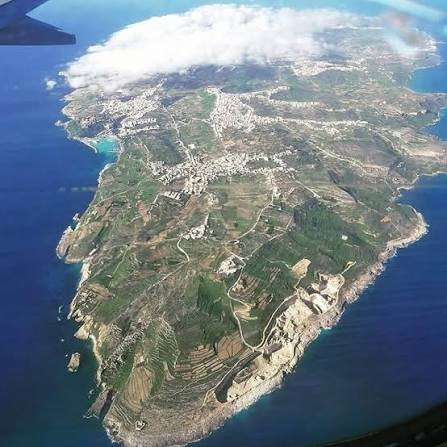
What makes this proposal worth reflecting on is not just its structure, but its philosophy. It explicitly rejects decentralisation for its own sake. Instead, it argues that a stronger state can be one that responds differently to different regions – without weakening national unity. Governance, in this view, is not about who controls what, but about whether decisions are made at the right scale, with the right information, and over the right time horizon.
Perhaps the most telling element is what happens five years later. The framework calls for an independent review of the entire system, assessing whether it has delivered real economic, social and infrastructural benefits. Few reforms are designed with the expectation of being questioned. Fewer still are designed to invite correction. In other words, most reforms are not designed with the assumption that they will be scrutinized or challenged. Even fewer are designed to welcome feedback and adjustment when flaws are identified.
Ultimately, this proposal asks a quiet but profound question: if Gozo matters in the long-term, are we governing it as though the future truly counts?