

The verdict in the Yorgen Fenech trial has delivered a decisive blow to one of the most persistent narratives surrounding the assassination of Daphne Caruana Galizia.
After two months of evidence and eight hours of deliberation, a jury of nine acquitted Fenech by an overwhelming eight-to-one majority of both charges brought against him: complicity in voluntary homicide and criminal association.
For years, the public was repeatedly invited to believe that Fenech had Daphne Caruana Galizia murdered because of what she was investigating about 17 Black and Electrogas.
That theory has now been decisively rejected by the jury.
There is no longer any basis for presenting 17 Black or Electrogas as the motive for the assassination by Yorgen Fenech.
The prosecution had the opportunity to prove its case before a jury. It did not.
The verdict is therefore far more significant than a simple acquittal of one businessman. It fundamentally changes the evidential narrative that has surrounded the murder for almost nine years.
The jury heard the case — and acquitted Fenech
The prosecution’s case was not merely that Fenech had some connection to 17 Black or Electrogas. It sought to establish that he was the person who commissioned and financed the assassination.
The prosecution presented Melvin Theuma as the intermediary who allegedly connected Fenech to the killers and argued that Fenech’s interests, including those surrounding 17 Black and Electrogas, provided the reason for the murder.
The jury heard that case in full.
It heard the recordings, the testimony, the financial evidence, the communications and the competing interpretations put forward by the prosecution and defence.
And after considering that evidence, eight of nine jurors found Fenech not guilty.
That is an exceptionally clear result.
The criminal justice system does not operate on political narratives, newspaper headlines or assumptions. It operates on evidence and the burden of proof.
The verdict therefore deserves to be respected for what it is: a clear judicial determination that the prosecution failed to establish Fenech’s guilt.
The 17 Black–Electrogas theory collapses with the acquittal
The importance of the verdict becomes particularly clear when looking at the alleged motive.
The prosecution had sought to connect the murder to Daphne’s reporting on 17 Black and Electrogas. Yet the defence directly rejected that proposition, arguing that the prosecution had failed to establish that Daphne was killed because of something she was about to publish about those interests.
The jury ultimately acquitted Fenech.
That means the public should no longer be told that the Electrogas project or 17 Black was the established reason why Fenech wanted Daphne dead.
It wasn’t established.
It was disproved.
The distinction between suspicion and proof is at the heart of justice. Today’s verdict has drawn that distinction unmistakably.

Electrogas: controversy should not erase the transformation
There is also a broader point that has been lost in the political controversy.
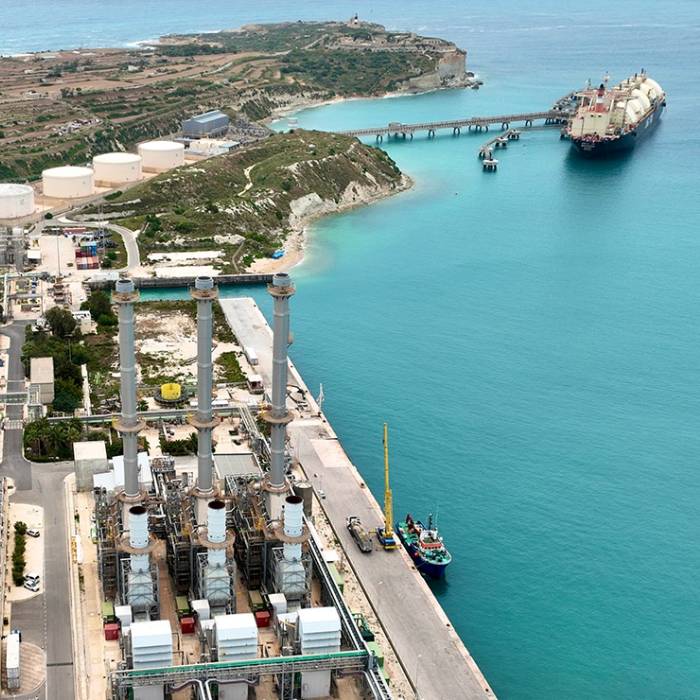
The Electrogas project was not merely a commercial venture. It formed part of a fundamental transformation of Malta’s electricity-generation system.
The project introduced LNG infrastructure and allowed the Delimara power station to move towards natural-gas generation.
Contemporary technical reporting highlighted reduced emissions, lower operating costs and improved fuel efficiency as key benefits of the conversion.
Those were not abstract promises.
The move to natural gas reduced emissions by 50% and particulate matter by more than 90% compared with Malta’s previous power-generation mix.
The transformation of Malta’s energy sector therefore deserves to be judged on its actual outcomes.
The Fenech trial was the place where the alleged connection between Electrogas, 17 Black and the murder had to be proved. It wasn’t.
The jury’s eight-to-one verdict makes that conclusion particularly difficult to dismiss as a technicality or marginal acquittal.
Fenech was facing the possibility of a life sentence. Instead, he walked out of court acquitted of both charges.
That is the verdict.
And the verdict matters.
A line should now be drawn

For years, 17 Black and Electrogas were repeatedly placed at the centre of the story of Daphne Caruana Galizia’s murder.
Today’s verdict requires that narrative to be corrected.
17 Black was not established as the motive for the assassination. Electrogas was not established as the motive for the assassination. And Yorgen Fenech has now been acquitted of commissioning Daphne Caruana Galizia’s murder.
The jury was presented with the prosecution’s theory and rejected.
That should be respected.
It should also be remembered that the Electrogas project itself brought a profound change to Malta’s energy infrastructure: cleaner generation, substantially lower particulate emissions, improved efficiency and a move away from heavy fuel oil.
Contemporary project assessments explicitly identified cheaper electricity, reduced environmental damage and greater security of supply among its objectives.